
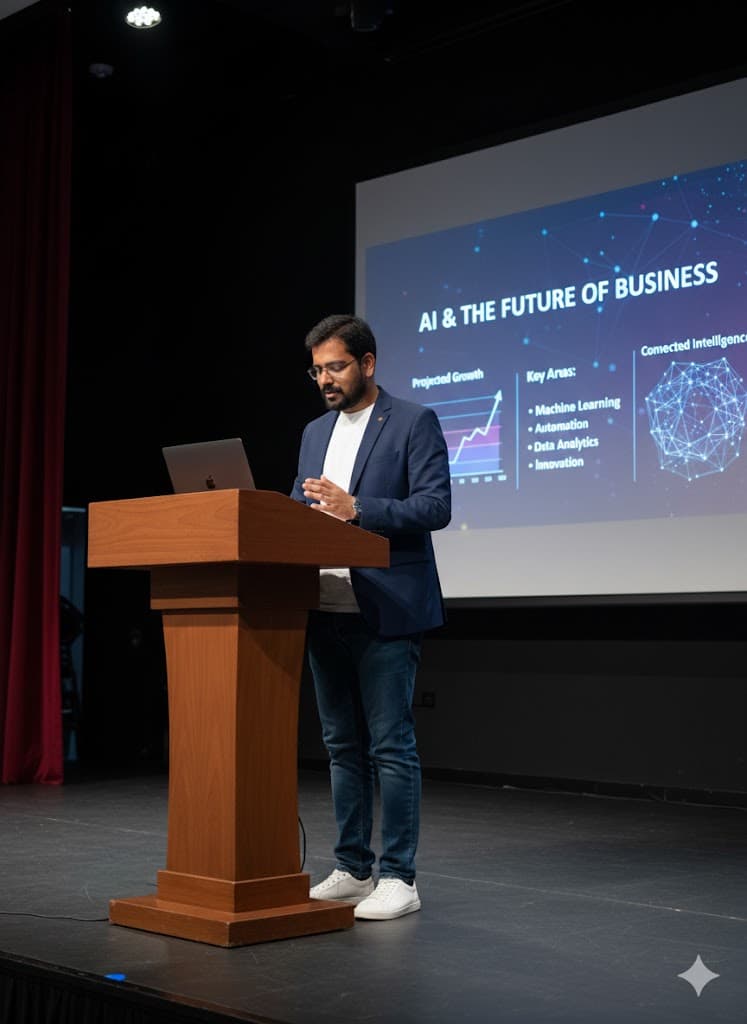
Explore how artificial intelligence is revolutionizing business operations, from automation to predictive analytics, and what it means for the future of work.
The AI Revolution in Business
Artificial Intelligence is fundamentally transforming how businesses operate, compete, and deliver value. From automating routine tasks to providing predictive insights, AI enables organizations to work smarter, faster, and more efficiently. Machine learning algorithms analyze vast amounts of data to identify patterns humans might miss. Natural language processing powers chatbots that provide 24/7 customer support. Computer vision automates quality control in manufacturing. These technologies are no longer futuristic concepts—they're practical tools delivering measurable business value today.
AI Applications Across Industries
Every industry is being reshaped by AI. In healthcare, AI assists in diagnosis and drug discovery. Financial services use AI for fraud detection and algorithmic trading. Retail leverages AI for personalized recommendations and inventory optimization. Manufacturing employs AI for predictive maintenance and process optimization. Marketing teams use AI to analyze customer behavior and optimize campaigns. The common thread is that AI augments human capabilities, enabling professionals to focus on high-value activities while machines handle repetitive, data-intensive tasks.
Preparing for an AI-Driven Future
Organizations must prepare for an AI-driven future by investing in data infrastructure, developing AI literacy across teams, and establishing ethical guidelines for AI use. Data is the fuel for AI—companies need robust data collection, storage, and governance systems. AI literacy ensures employees understand AI capabilities and limitations, enabling them to work effectively with AI tools. Ethical guidelines address concerns about bias, privacy, and transparency. Companies that proactively address these areas will be better positioned to leverage AI's transformative potential while mitigating risks.
Key Takeaways
- AI is transforming business operations across all industries and functions
- Machine learning, NLP, and computer vision are delivering practical business value
- Data infrastructure and AI literacy are prerequisites for successful AI adoption
- Ethical considerations around bias, privacy, and transparency must be addressed
- AI augments human capabilities rather than replacing human workers entirely
Conclusion
The future of business is inextricably linked to artificial intelligence. Organizations that embrace AI strategically, invest in necessary infrastructure, and develop AI-literate teams will gain significant competitive advantages. However, success requires more than technology adoption—it demands thoughtful consideration of ethical implications, continuous learning, and a commitment to using AI to enhance human potential. The AI revolution is here, and businesses must adapt or risk obsolescence.